
Athlete’s Foot Treatment in Bellevue
Athlete’s foot is a common fungal infection that causes itching, burning, and peeling skin, usually between the toes. Most cases clear with the right care, but it tends to return when feet stay warm and damp. Dr. Hubert Lee confirms what is behind your symptoms and helps clear stubborn or recurring infections.
Athlete’s foot, or tinea pedis, is a common fungal infection of the skin on the feet. It usually responds to simple treatment, but it tends to come back when feet stay warm and damp. If you need to be seen quickly, we offer same-day and urgent care appointments.
What is athlete’s foot?
Athlete’s foot is a fungal skin infection, from the same family of fungus behind toenail fungus. It often starts between the fourth and fifth toes and can spread across the sole and sides of the foot.
The infection irritates the skin, which is what causes the itching, burning, and peeling. It can affect one foot or both, and it ranges from a mild nuisance to cracked, painful skin that makes walking uncomfortable.
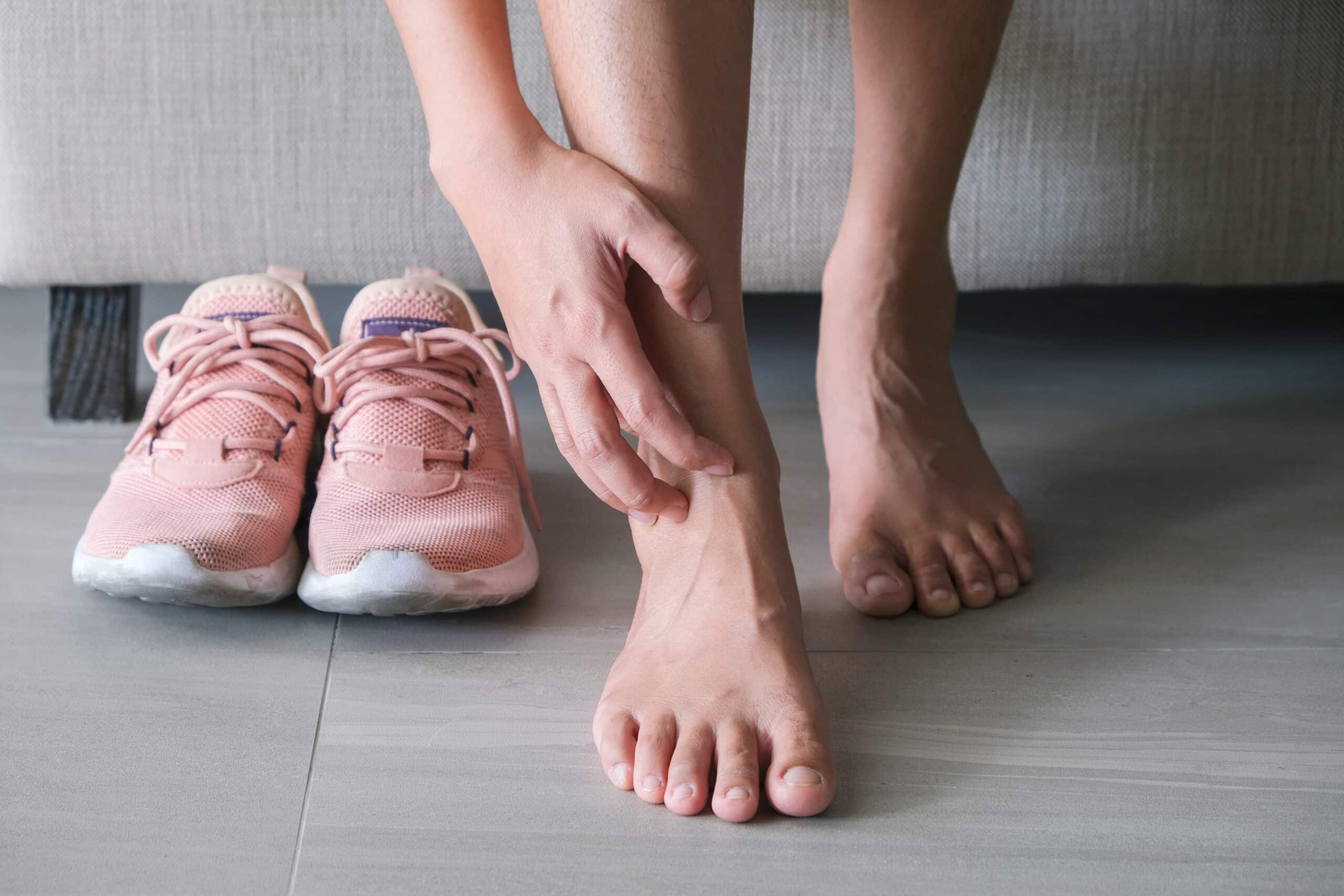
Symptoms of athlete’s foot
Athlete’s foot shows up on the skin, usually between the toes first. Common signs include:
- Itching, stinging, or burning, often worse right after you take your shoes off.
- Peeling, flaking, or cracking skin, especially between the toes.
- Redness, scaling, or a dry, rough texture on the soles.
- Small blisters or oozing in some cases.
- An odor that comes with the moisture.
- Skin that worsens the longer feet stay warm and damp.
What causes athlete’s foot
Athlete’s foot is caused by fungus that thrives in warmth, darkness, and moisture, exactly the environment inside a shoe. Common contributors include:
- Sweaty feet and shoes that trap heat and moisture.
- Walking barefoot in locker rooms, pool decks, showers, and gyms.
- Sharing towels, socks, or shoes.
- Thick socks and insulated boots, which is why it is just as common in winter as in summer.
- Skin that stays damp, which helps the fungus settle in.
Is it athlete’s foot, or something else?
Not every patch of itchy, scaly skin on the foot is athlete’s foot. Conditions like eczema and psoriasis can look very similar, with redness, flaking, and irritation that is easy to mistake for a fungal infection. The difference matters, because an antifungal will not help a condition that is not caused by fungus.
A useful clue: if you have used an over-the-counter antifungal correctly for two to four weeks and the skin is not improving, it may not be fungus. That is a good time to have it looked at rather than keep treating the wrong problem. A podiatrist can examine the skin, and test it when needed, to tell the difference and point you toward the right treatment.
Our approach at CarePlus
Most athlete’s foot clears with consistent care, so Dr. Lee starts with what works for the majority of cases: an appropriate antifungal, used correctly and for the full course, along with steps to keep the feet dry. When an infection is stubborn, keeps returning, or has spread, he can prescribe stronger topical or oral treatment, and confirm the diagnosis if a look-alike condition is suspected. Because the same fungus can move into the nails, he also addresses related toenail fungus when it is present, and treats athlete’s foot with extra care in patients who have diabetes or reduced circulation through their diabetic foot care.
How to keep athlete’s foot from coming back
Athlete’s foot is known for returning. Prevention is mostly about denying the fungus the warmth and moisture it needs:
- Wear sandals or shower shoes in locker rooms, pool areas, and public showers.
- Dry between your toes every time, after showers and workouts.
- Alternate your shoes so each pair can air out, and consider an antifungal powder in shoes that get sweaty.
- Choose moisture-wicking socks and change them when they get damp.
- Wash socks, towels, and bath mats regularly, and do not share them.
- Treat the infection fully the first time so there is less to come back.
When to see a podiatrist
Athlete’s foot is often manageable at home, but some situations call for professional care. Consider an evaluation when:
- Over-the-counter treatment has not helped after two to four weeks.
- The infection keeps coming back or keeps spreading.
- The skin is badly cracked, blistered, or painful, or shows signs of a secondary infection such as increasing redness, swelling, warmth, or drainage.
- The fungus appears to be spreading to your toenails, which are harder to treat.
- You have diabetes or circulation problems, where even minor foot infections deserve prompt attention.
Why choose CarePlus for athlete’s foot
Most athlete’s foot is straightforward, but a stubborn or recurring case, or one that turns out to be a look-alike condition, benefits from an accurate diagnosis. Dr. Hubert Lee is a board-certified, fellowship-trained podiatrist with more than 15 years of experience, and he treats the skin and nail conditions of the foot conservatively and thoroughly. Patients across Bellevue, Redmond, Kirkland, Mercer Island, Issaquah, Sammamish, and the greater Seattle area come to CarePlus for that care.
Frequently Asked Questions About Athlete’s Foot
How do I tell athlete’s foot from psoriasis or eczema?
They can look very similar, with redness, scaling, and itching. One useful clue is that an over-the-counter antifungal will not improve a condition that is not caused by fungus, so if two to four weeks of correct use is not helping, it may be eczema, psoriasis, or something else. A podiatrist can examine the skin, and test it when needed, to tell the difference.
How long does athlete’s foot take to clear up?
Most cases improve within a few weeks of consistent over-the-counter antifungal treatment. The important step is to keep treating for the full time on the label, often a week or two past when symptoms fade, so the fungus clears rather than returning.
Can I treat athlete’s foot at home, or do I need a podiatrist?
Many cases respond to over-the-counter antifungals and good foot hygiene. See a podiatrist if it does not improve after two to four weeks, keeps coming back, spreads, or if you have diabetes or circulation problems, where even minor foot infections deserve prompt attention.
Is athlete’s foot contagious?
Yes. It spreads through direct contact and through shared surfaces such as locker room floors, showers, towels, socks, and shoes. Wearing sandals in public wet areas and not sharing footwear helps prevent it.
Can athlete’s foot spread to my toenails?
It can. The same fungus can move into the nails, which then become thick and discolored and are harder to treat than skin. If you notice nail changes, it is worth addressing early.
Can you get athlete’s foot in winter?
Yes. Thick socks and insulated boots trap heat and sweat, creating the warm, damp environment fungus needs. Athlete’s foot is common year-round, not only in summer or at the pool.
Athlete’s foot that will not clear? Get it checked.
Find out what is causing your symptoms and get on the right treatment. Schedule a visit with Dr. Lee at CarePlus in Bellevue.